
|
Our planet needs your garden!
This call to action is to feed the bees. Take every opportunity to plant bee pastures!
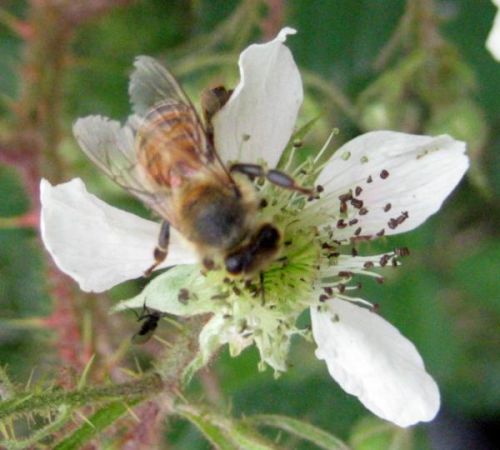
Gardens are beautiful, bringing life to the cityscape and offering a glimpse of nature. However, how you design your garden is a matter of taste, as well as a matter for your neighbours, who like to keep a watchful eye on what you do with your 'piece of nature'.
Straight rows of flowerbeds where nothing uninvited is allowed to grow simply aren't to everyone's taste. The era of purely decorative gardens is long gone, though – at least since we decimated the insect population.
Not all gardening enthusiasts have noticed that nobody cries 'Oh no, a bee!' when enjoying a spritzer in the garden anymore. The comforting buzz of bees, wasps and bumblebees has almost fallen silent in our green, stress-free retreats. This is due to the major problems our little pollinators are facing, for which we alone are responsible.
Our call to action is to feed the bees!
Who would have thought that one day we would have to heed such calls? The advice is to plant bee pastures wherever possible and to put out thick sugar water to help exhausted bees find their way back to their hives. They are often too exhausted to do so because they have had to fly too far to find food. This may sound dramatic, but it's true. We must do our best to help these little creatures survive, because without them, our own lives will also come to an end in a few years.
This advice does not apply to honeybees kept by beekeepers, of course. These farm animals are fed by their keepers when there are no flowers in bloom. In this case, protection is unnecessary.

Not everyone has a garden, but windowsills and balconies are ideal places to provide food for bees. You just need to plant the right flowers, some of which are ideal for flower boxes or pots.
This is easy to achieve in gardens as specialist retailers now offer bee-feeding mixtures. Many of the plants that hard-working gardeners remove during a big clear-up are important for bees and other insects.
Useful plants for bee pastures
Also known as bee forage plants, bee pastures are plants that produce a lot of pollen or nectar, making them very important for bees.
One example is borage. It is interesting for humans, too. Its attractive, edible leaves can be used in salads. This blue-flowering plant is not very demanding. Once established, it can fend for itself.
Another example is the beautiful nasturtium. It is easy to grow on a windowsill or balcony and popular with humans. The entire plant is edible and highly nutritious, and its spicy flavour is a real highlight in salads. With so many varieties available in stores, there is something for everyone, whether you prefer small shrubs or climbing plants.
Catnip is another attractive option. Its purple flowers look good anywhere. Catnip has a pleasant, minty aroma, and it also keeps flies away from windowsills. It is easy to care for and spreads quickly.
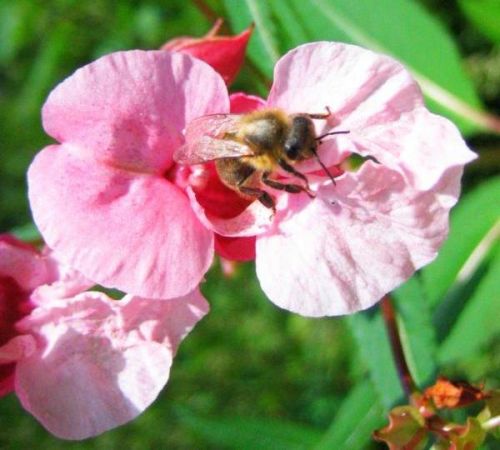
While clover may be a nuisance for those who like their lawns neat and tidy, it is a veritable feast for bees. It thrives in slightly moist soil and establishes itself wherever it pleases. Since clover is not an unsightly weed, there is no reason why it should not be tolerated.
Cornflowers are not always blue. There are other colour variations, too. These beautiful plants are interesting not only for bees, but also because the flowers are edible. These little sun worshippers can make gardens and balconies look beautiful. So let's treat ourselves and the bees to them!
Lavender, which has always been a popular garden plant, is not only valuable to bees. Beautiful to look at and with a wonderful scent, it keeps small invaders out of your linen cupboards. It also has medicinal properties.
Many people enjoy mallow tea, often mixed with rosehip. This elegant plant is popular with humans and little pollinators alike. Mallows thrive even in small spaces.
Sunflowers are easy to grow and symbolise the beauty of summer. A corner of the garden should always be reserved for them, not only for our enjoyment, but also to provide a source of nectar for bees that stop by.
Phacelia, also known as bee balm, improves the soil as it produces lots of pollen. Its tufted flowers are covered in small blossoms and act as a real filling station for bees.
There are many other good bee pastures, including rapeseed and buckwheat. Depending on what is available, you can choose the right one to help the bees. Ultimately, this means helping ourselves because a world without bees is not viable.
This is why we should take every opportunity to plant bee pastures. Gardens should have more space for wildflowers, as many cultivated varieties are irrelevant to bees. Wild roses are the answer, as their individual flowers are highly attractive to bees.
We should rejoice at every bee we see. Sadly, this is no longer the case. Our call to action: Plant bee pastures! Every flower box and pot counts.
© 'Our planet needs your garden! Our call to action is to feed the bees. Take every opportunity to plant bee pastures!': An article by Pressenet (translated by Izabel Comati), 12/2025. Images of bees: Pressenet.
– Death Row: Who would want a stray dog like me?
– The snowman, a very special friend
– Da Vinci's origins: Where is the real Leonardo?
Discover more articles! Use the search function:
English archive:
More reviews, book presentations and essays
2024/2025
German archive:
2025 |
2024 |
2023 |
2022 |
2021 |
2020 |
2019 |
2018 |
2017 |
2016 |
2015 |
2014 |
2013 |
2012 |
2011 |
2010 |
2009
Become a writer for Pressenet! Write articles for our online magazine on trending topics such as best books to read, health and wellness, technology and gadgets, business and finance, travel and tourism, lifestyle and fashion or education and career. Info: Become an author
Sponsors and investors are welcome: If you found our articles interesting, we would be grateful for a donation. Please also recommend us to your networks. Thank you very much!





Sitemap About Privacy Policy RSS Feed