
|
No one really knows what the future holds (Essay)
Those who understand the present are ready for the future
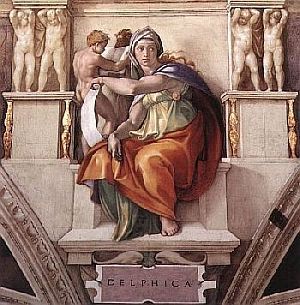
The desire for knowledge is as old as humanity itself. This is particularly true of knowledge that cannot be acquired through study or from a teacher. It is about gaining a glimpse into future events.
No one really knows what the future holds. While forecasts can be calculated, they are never 100 per cent accurate. Furthermore, reliable trend analysis typically requires more information than is available. The course of events depends on many factors, above all people and events.
Anyone making plans must always consider the possibility that an unforeseen event could ruin or fundamentally alter them. Consider a faulty starter motor, for instance. If the car won't start, even the most meticulous timetable will be useless. Ignoring the strange noises the car was making when starting for too long, instead of getting them checked, could lead to trouble at work – this could have been avoided.
Even if you set off on time, you could still be involved in a pile-up. Circumstances suddenly take the reins, and one thing leads to another like a row of toppling dominoes. However, this doesn't necessarily have to be a bad thing. Everyone is probably familiar with the oracular saying: 'Who knows what good it will do.'
These are just a few examples, but the possible future cannot be predicted with exact precision. In fact, those seeking advice rarely want to know what tomorrow will bring – or, at least, they rarely do. Usually, it's about understanding the present, which is often complex enough. Questions such as whether to change jobs or whether one's partner is being unfaithful are not related to the future. Both will inevitably impact what lies ahead, but first, clarity must be established. The future takes on a new shape the moment one is certain about what is happening right now.
Someone who is seriously considering changing jobs has certainly already looked around, or at least gathered information. Similarly, anyone who suspects infidelity has reasons for this assumption and isn't doing so for fun. Only the person asking the question knows how much their unsatisfying or stressful work situation weighs on them, and people in relationships are keenly aware of even the slightest changes.
Ultimately, the important thing is to dispel the doubt. The aim is to perceive the situation objectively rather than subjectively. The question becomes: 'Am I just feeling overwhelmed or bored at the moment, or is working at this company really no longer viable for me?' In the other case, it might be: 'Am I suspecting my partner without good reason, merely imagining these small signs of estrangement, or has something actually happened?' In reality, it is more a form of introspection than an oracle. The future emerges from what one learns in the process.
Many methods of divination reveal trends and possible outcomes. Tarot or I Ching readings, like many other methods, point to corresponding behaviours or actions that can influence events positively or negatively, thereby providing a certain degree of insight. Actually 'seeing' that a cup will break in a week's time, or that someone will come to harm, belongs more to the realm of visions. Such visions do exist, but they do not occur on demand.
Crystal gazers do not see a 3D film with sound and colour when they look into a crystal ball. The key is to establish contact with the unconscious mind. With some practice and the necessary sensitivity, messages will reveal themselves, albeit more to the mind's eye than within the crystal ball. Staring at shiny surfaces such as mirrors, polished metal plates or even crystal can induce a light trance. Thus, even though it may sound strange, this provides a clear view of things. However, as always, the here and now is what matters most. Events in the future can be perceived, but they are not set in stone. The strongest trend manifests itself as a prominent possibility, but this can be altered by a myriad of factors.
It is certainly appropriate to consult the oracle to gain insight into one's desires, fears, strengths and weaknesses. The same applies when analysing a situation. After all, the future begins with every passing moment, and we have more than just a say in the matter. But who would want to know what will happen tomorrow, minute by minute, before the day has even begun?
© 'No one really knows what the future holds. Those who understand the present are ready for the future': An essay by Winfried Brumma (translated by Izabel Comati), 08/2026. The illustration shows the Delphic Sibyl (a detail from a fresco by Michelangelo in the Sistine Chapel), CC0 (Public Domain Licence).
– Time announcement: When time stood still (Short story)
– A horse dreams of a life without barriers (Short story)
– The Court Cards in the Rider-Waite Tarot deck
Discover more articles! Use the search function:
English archive:
More reviews, book presentations and essays
2024/2025
German archive:
2025 |
2024 |
2023 |
2022 |
2021 |
2020 |
2019 |
2018 |
2017 |
2016 |
2015 |
2014 |
2013 |
2012 |
2011 |
2010 |
2009
Become a writer for Pressenet! Write articles for our online magazine on trending topics such as best books to read, health and wellness, technology and gadgets, business and finance, travel and tourism, lifestyle and fashion or education and career. Info: Become an author
Sponsors and investors are welcome: If you found our articles interesting, we would be grateful for a donation. Please also recommend us to your networks. Thank you very much!


Sitemap About Privacy Policy RSS Feed